
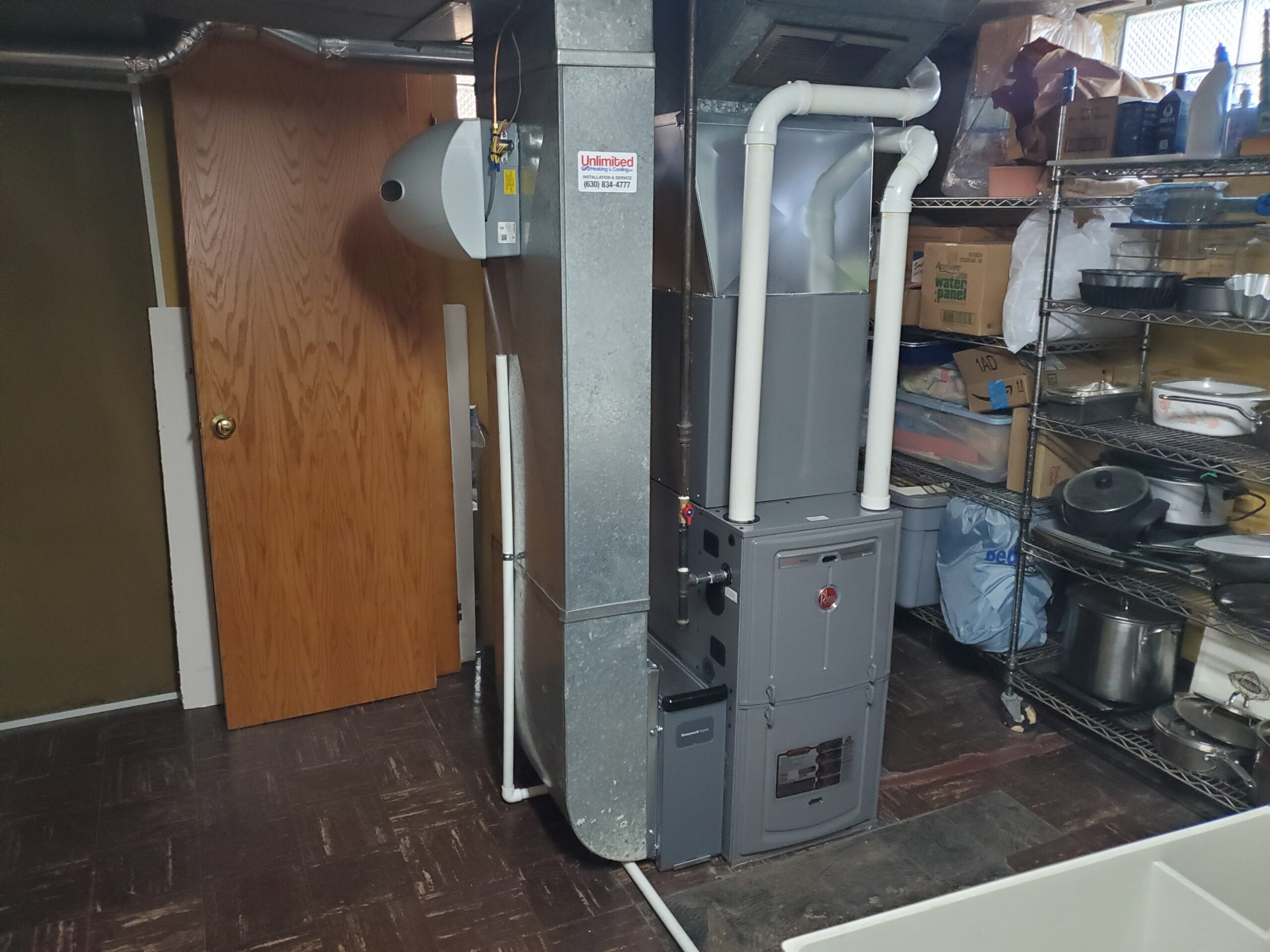
After nearly 28 years, the heating and cooling equipment in this Elmhurst home was ready for an upgrade. Rather than waiting for an equipment failure, the homeowners decided to proactively replace their existing system with an emphasis on improving comfort and energy efficiency.
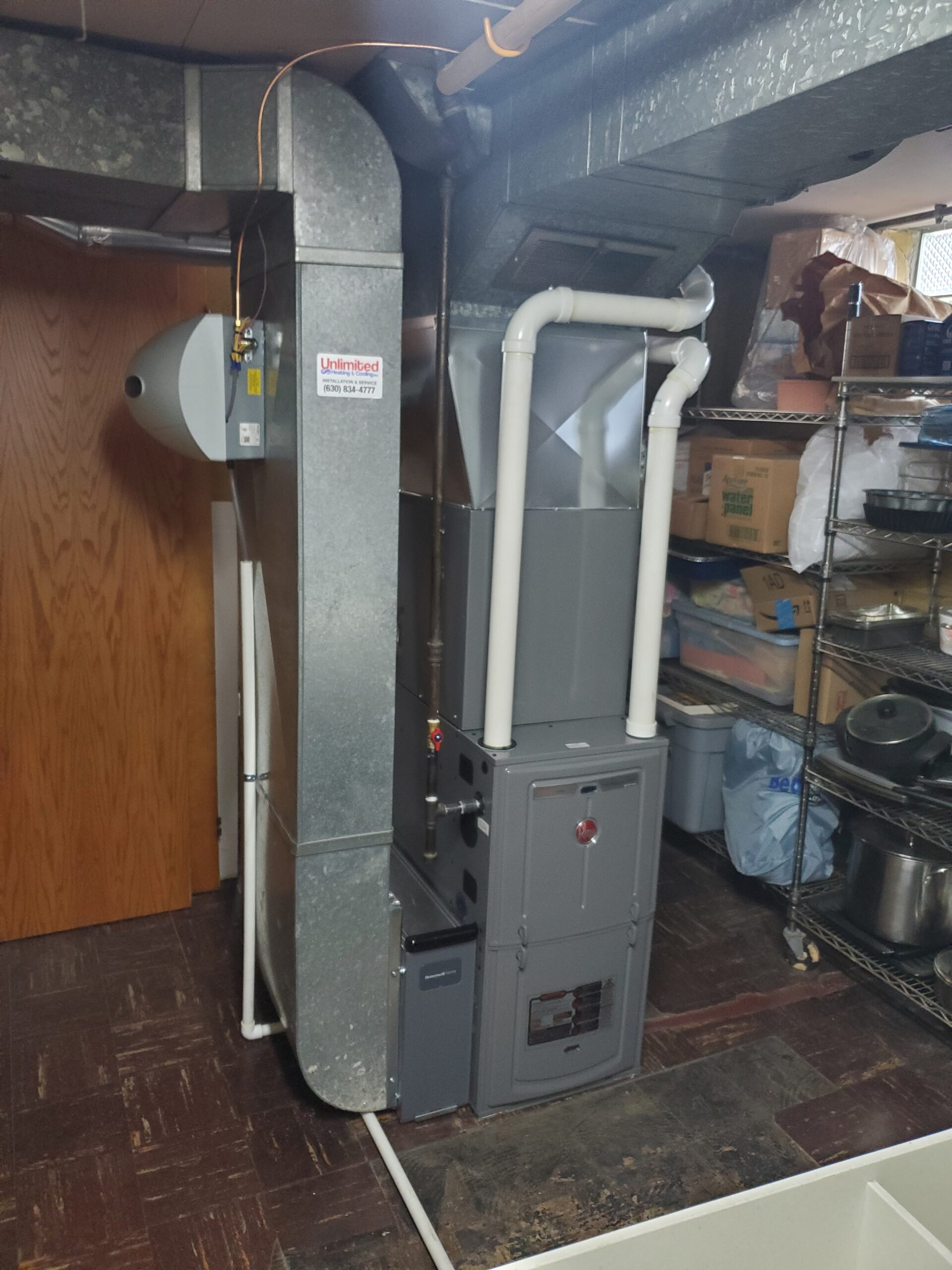
At Unlimited Heating & Cooling, we installed a fully communicating Rheem Prestige dual-fuel HVAC system featuring a 98% efficient modulating gas furnace, a variable-speed side-discharge heat pump, whole-home humidification and upgraded air filtration.
This installation is a great example of how residential heating and cooling technology has evolved since the late 1990s.
The Existing Heating and Cooling System
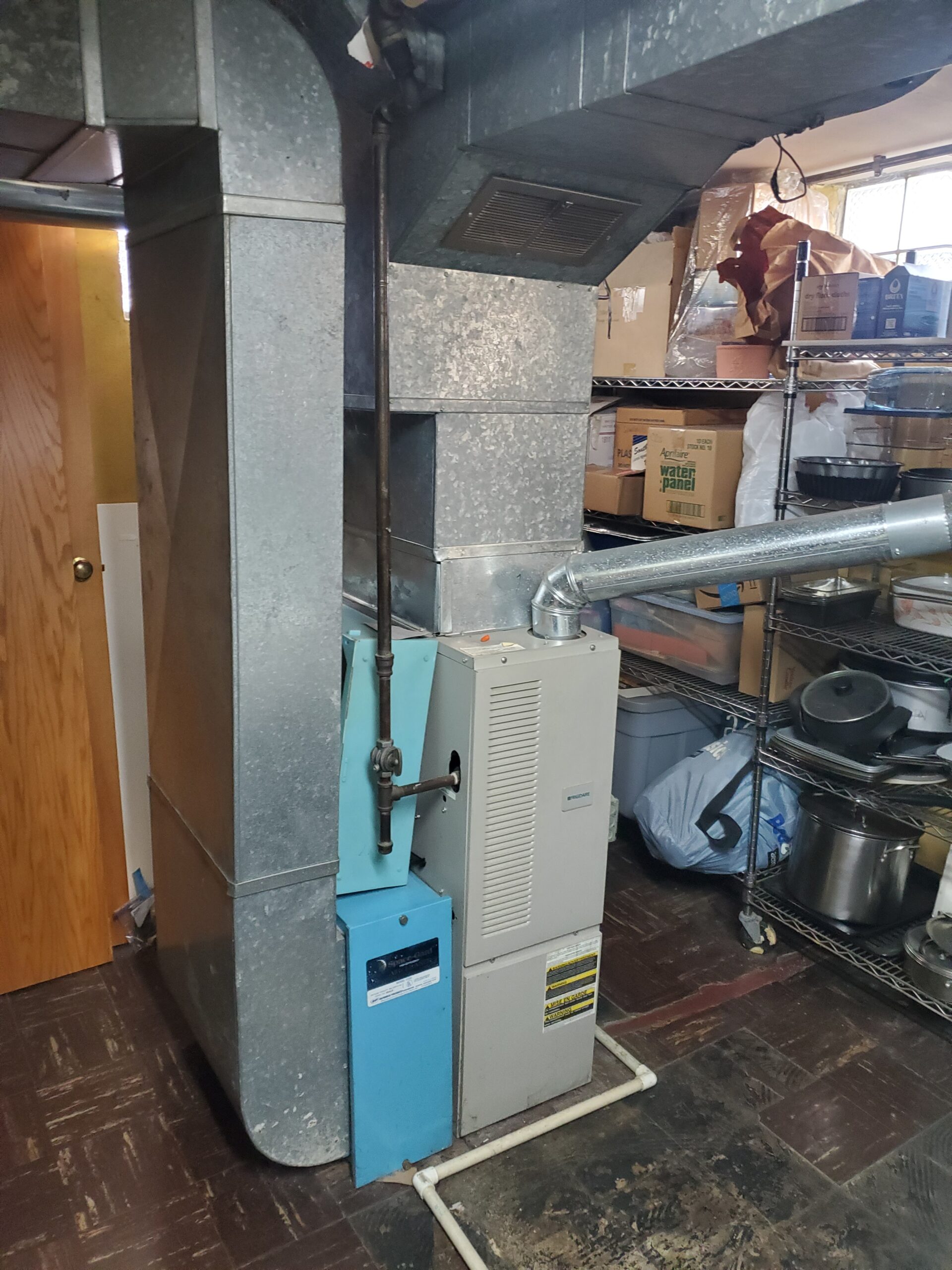
The home’s original heating and cooling equipment was manufactured in 1998 and consisted of:
- Nordyne G6A072C-12, 80% efficient single-stage gas furnace
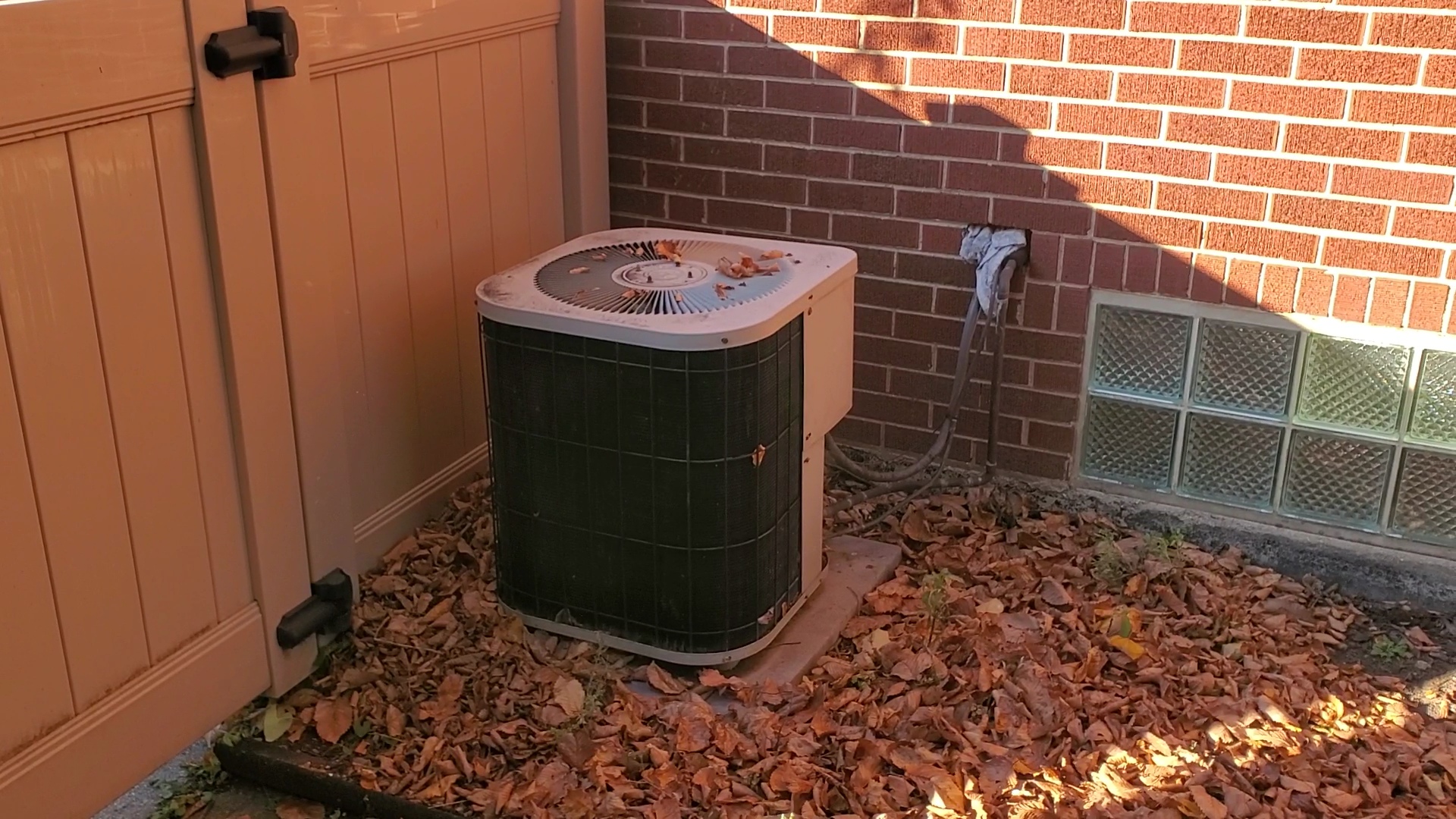
- Goodman CK24-18, 8 SEER central air conditioner
- Space-Gard Model 2200 filter cabinet that had been modified to accommodate a standard four-inch filter
Although the equipment had provided many years of service, advancements in heating and cooling technology presented an opportunity to improve indoor comfort, reduce energy consumption and modernize the installation.
The homeowners were particularly interested in more consistent indoor temperatures, improved efficiency and quieter equipment operation.
The New Rheem Prestige HVAC System
We installed the following equipment:
| Equipment | Model |
|---|---|
| Rheem Prestige 98% modulating gas furnace | R98MV0603A17UPSGAP |
| Rheem Endeavor evaporator coil | RCFY2417STANMC |
| Rheem Prestige side-discharge heat pump | RD18AY24AJVCA |
| Rheem EcoNet Smart Thermostat | EcoNet |
| Honeywell MERV 11 media air cleaner | F100 |
| AprilAire whole-home humidifier | 500 |
The installed furnace and matched heat pump equipment combination have the following efficiency ratings:
- Gas furnace: 98% AFUE
- Cooling efficiency: 19 SEER2
- Heat pump heating efficiency: 10 HSPF2
- EER2: 11.0
- AHRI reference number: 217176048
The furnace, heat pump and EcoNet thermostat work together as a communicating system, allowing the equipment to adjust its operation based on the home’s heating, cooling and humidity demands.
Single-Stage vs. Modulating Gas Furnaces
One of the most significant improvements in this installation is the transition from a single-stage furnace to a modulating furnace.
A traditional single-stage furnace operates at full heating capacity whenever the thermostat calls for heat. Once the desired temperature is reached, the furnace shuts off and waits for the next heating cycle.
The Rheem R98MV takes a different approach.
Its modulating gas valve allows the furnace to operate between 40% and 100% of its heating capacity. Combined with a variable-speed blower motor, the furnace can adjust both heating output and airflow to better match the needs of the home.
Rather than repeatedly delivering short bursts of heat at full capacity, a modulating furnace can operate for longer periods at reduced capacity.
The potential benefits include:
- More consistent indoor temperatures
- Reduced temperature fluctuations between heating cycles
- Quieter operation at lower capacities
- More gradual and comfortable airflow
- Improved overall heating efficiency
While a modulating furnace typically represents a greater initial investment than a single-stage or two-stage furnace, the additional comfort can make it an attractive option for homeowners.
Why We Installed a Side-Discharge Heat Pump
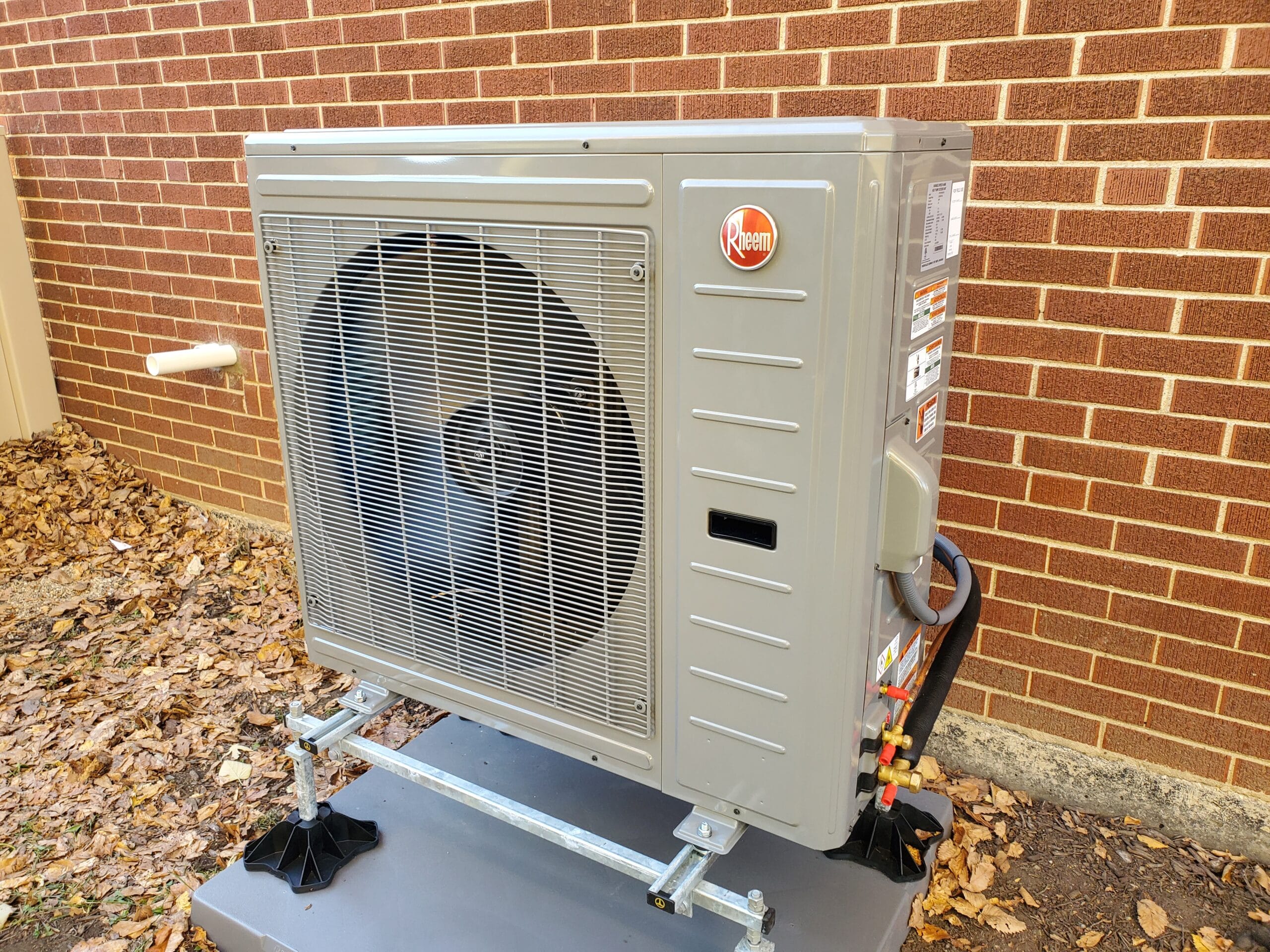
Instead of replacing the existing Goodman air conditioner with another conventional air conditioner, we installed a Rheem RD18AY Prestige Series side-discharge heat pump.
Unlike a traditional air conditioner, a heat pump can provide both heating and cooling.
The RD18AY also features an inverter-driven compressor that adjusts its operating capacity in response to demand, rather than operating exclusively at full capacity.
The homeowners were particularly interested in the appearance and sound characteristics of the side-discharge design. Its relatively slim cabinet also provides additional flexibility when determining equipment placement.
In this installation, the side-discharge heat pump was actually a less expensive equipment option than the comparable traditional Rheem heat pump.
We relocated the outdoor unit approximately eight feet along the same side of the house and installed it on an elevated equipment stand.
The relocation also allowed us to utilize the general area of the original refrigerant line penetration for the new furnace exhaust and combustion air intake piping.
How Dual-Fuel Heating Works in Illinois
A dual-fuel HVAC system combines an electric heat pump with a natural gas furnace.
During the cooling season, the heat pump operates much like a conventional central air conditioner, removing heat from inside the home.
During the heating season, the system can use either the heat pump or the gas furnace, depending on outdoor temperatures and system settings.
For this particular installation, we configured the system with a heat pump heating lockout temperature of 40°F. Below that temperature, the gas furnace provides the home’s heating.
This allows the homeowners to utilize electric heating during milder weather while retaining the heating capabilities of a high-efficiency gas furnace during colder Illinois winters.
The 40°F setting is specific to this installation and is not the lowest outdoor temperature at which the heat pump is capable of operating.
Selecting an appropriate changeover temperature depends on equipment performance, the home’s heating requirements, local utility rates and homeowner preferences.
What About Energy Savings?
Heating Efficiency: 80% vs. 98% AFUE
AFUE, or Annual Fuel Utilization Efficiency, measures how efficiently a furnace converts fuel into usable heat over a heating season.
Where Does Your Heating Energy Go?
For every 100 units of natural gas energy supplied.
Original Nordyne furnace
80% useful heat · 20% energy losses
New Rheem Prestige furnace
98% useful heat · 2% energy losses
18.4% Potential Reduction in Natural Gas Consumption
Based on rated furnace AFUE and equivalent heating demand, excluding heat pump operation.
1 − (80 ÷ 98) = approximately 18.4%
Based solely on rated furnace efficiency, upgrading from an 80% furnace to a 98% furnace could reduce natural gas consumption for the same heating demand by approximately 18.4%.
For example, a homeowner spending $1,000 annually on natural gas specifically for space heating, excluding fixed utility charges, could potentially reduce that expense by approximately $184, assuming identical heating requirements and utility rates.
The addition of a heat pump can further reduce natural gas consumption by providing electric heating during milder outdoor conditions. However, reductions in natural gas usage do not necessarily translate directly into equivalent reductions in total utility costs.
Cooling Efficiency: 8 SEER vs. Modern SEER2 Technology
The original Goodman air conditioner was rated at 8 SEER. The new Rheem heat pump represents a substantial improvement in rated cooling efficiency, with the matched equipment combination certified at 19 SEER2.
Because SEER and SEER2 are based on different testing procedures, a direct percentage comparison would not accurately represent expected energy savings.
Actual utility savings will depend on weather conditions, thermostat settings, equipment operation, the home’s construction and electricity and natural gas rates.
Whole-Home Comfort with Rheem EcoNet
Energy efficiency is only one part of a comfortable home. Temperature, airflow, humidity and air filtration all play important roles.
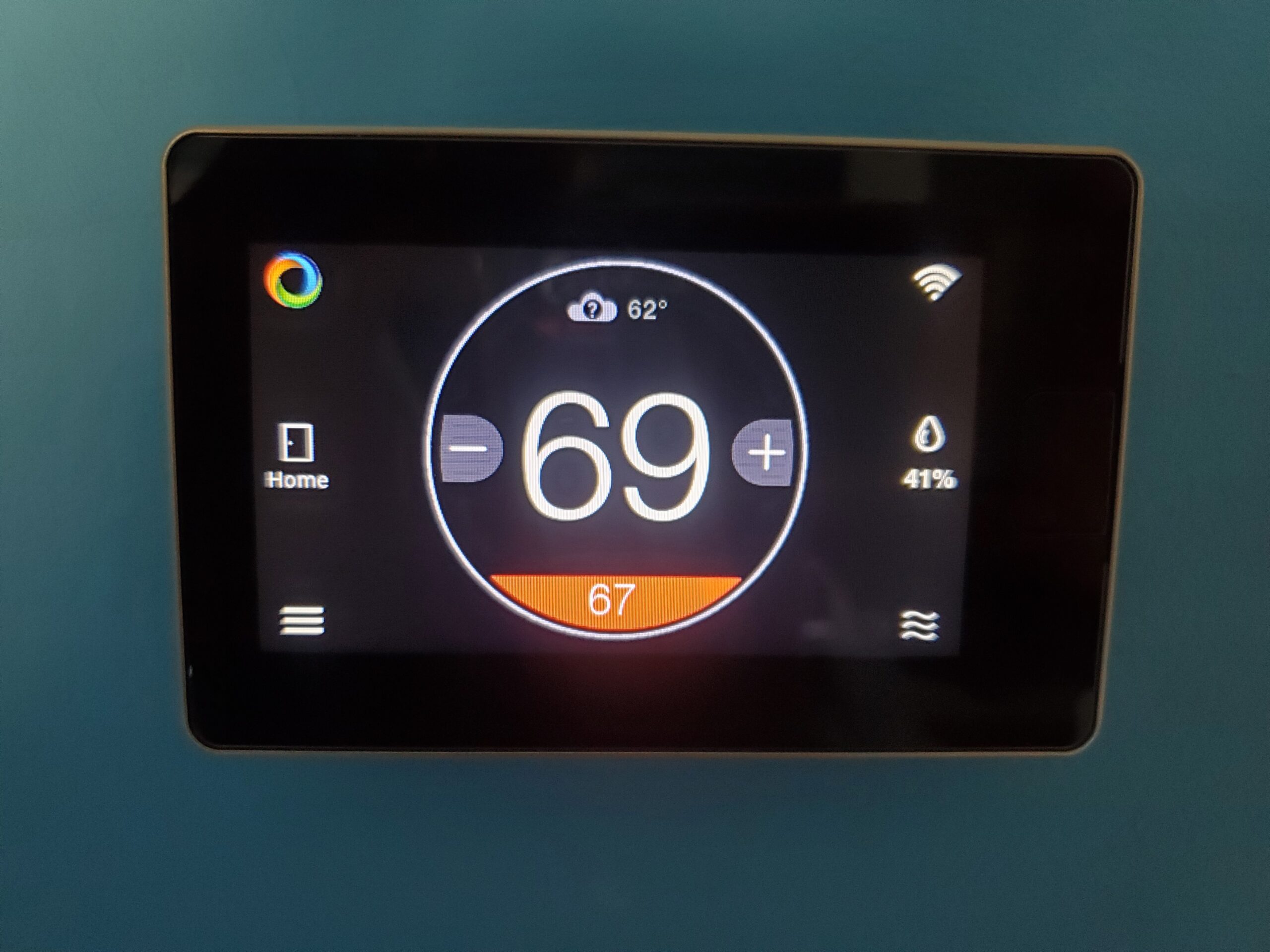
The Rheem EcoNet Smart Thermostat serves as the central control for this communicating HVAC system.
In addition to controlling heating and cooling, EcoNet coordinates equipment operation and provides humidity control throughout the year.
Winter Humidification
We installed an AprilAire 500 whole-home bypass humidifier on the existing return ductwork.
Controlled through EcoNet, the humidifier adds moisture to the home’s air when needed during the heating season, helping alleviate the discomfort associated with excessively dry indoor air.
Summer Dehumidification
During the cooling season, the communicating system can adjust its cooling and airflow operation to improve moisture removal.
This can help maintain comfortable indoor humidity levels without relying solely on lowering the thermostat temperature.
Improved Air Filtration
The original modified filter cabinet was replaced with a Honeywell F100 media air cleaner equipped with a MERV 11 filter.
This provides improved particle filtration compared with typical basic, low-efficiency furnace filters while offering convenient access for routine filter replacement.
The Installation: More Than Just Equipment Replacement
A properly installed HVAC system involves much more than selecting high-quality equipment.
For this Elmhurst installation, we completed several additional improvements:
- Fabricated and installed a new supply air plenum
- Retained and incorporated the existing return air drop
- Installed a new media air cleaner and whole-home humidifier
- Installed new PVC furnace exhaust and combustion air intake piping
- Installed new condensate drainage piping
- Installed a new gas shutoff valve
- Installed a new humidifier water supply line
- Replaced the refrigerant line set
- Relocated the outdoor equipment
- Installed a new electrical disconnect and surge protector
The previous furnace’s metal flue pipe extended across the walkway, requiring anyone passing through the area to duck underneath it. The new furnace venting arrangement eliminated that obstruction.
These details contribute to the functionality, serviceability and overall quality of the completed installation.
Watch the Before-and-After Installation
See the transformation from the original 1998 furnace and air conditioner to the new Rheem Prestige dual-fuel HVAC system in our short installation video.
Is a High-Efficiency HVAC System Right for Your Home?
Not every home requires a modulating furnace or a variable-speed heat pump. Equipment selection should take into consideration the home’s heating and cooling requirements, existing ductwork, installation conditions, budget and comfort priorities.
At Unlimited Heating & Cooling, we help homeowners understand their options and select equipment that makes sense for their individual homes.
Family-owned and serving Elmhurst and the surrounding communities since 1984, we provide professional furnace installation, air conditioning installation, repair and maintenance throughout DuPage County and western Cook County.
If you’re considering replacing your existing furnace, air conditioner or upgrading to a dual-fuel HVAC system, contact Unlimited Heating & Cooling to discuss your options.
Professional Service for Personal Comfort.